

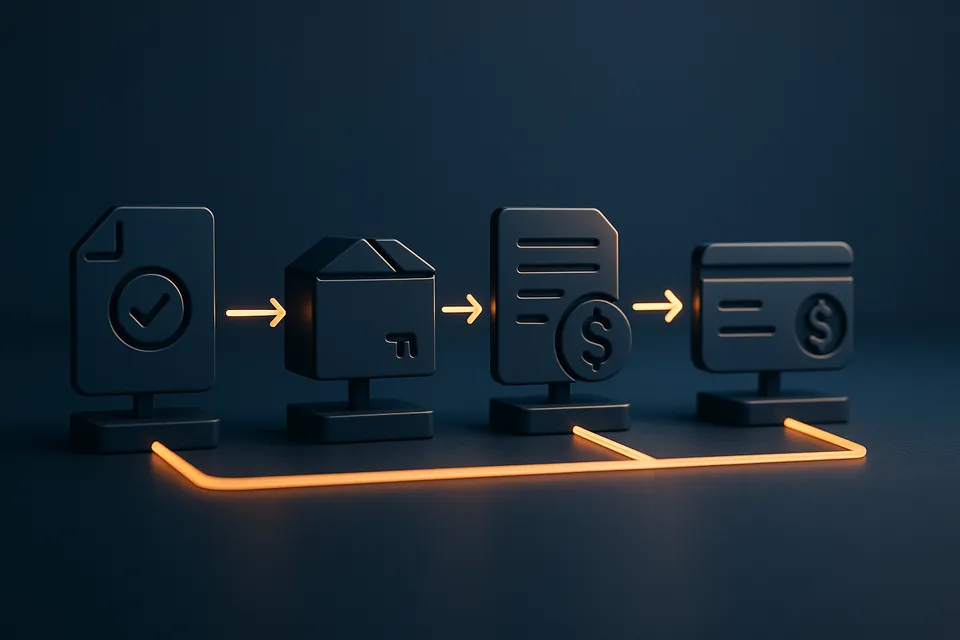
Understanding the Order-to-Cash Process
The order-to-cash (O2C) process is a fundamental business function that spans from the moment a customer places an order to the collection of payment. It significantly impacts revenue flow, customer satisfaction, and operational efficiency. Small and medium businesses often face challenges in this area due to limited resources and complex manual procedures.
Common issues in the O2C process include errors in order entry, delays in billing and invoicing, and difficulties in payment collection and reconciliation. These problems can disrupt cash flow and strain customer relationships. Digital transformation offers a solution by streamlining processes, reducing errors, and enhancing efficiency. Digital tools automate repetitive tasks, integrate functions, and provide real-time insights, making order management more agile and responsive.
Digital Order Capture and Processing
Automated order capture via CRM systems is essential for modernizing the O2C cycle. Digitizing order entry ensures accuracy and speed in capturing customer orders. CRM systems integrate seamlessly with sales platforms, enabling automatic entry of order details without manual intervention, thus reducing errors and minimizing order processing time.
Digital tools also improve communication between departments, ensuring inventory management aligns with order processing. Integration with inventory systems provides real-time stock updates, preventing over-selling and backorders. This connectivity maintains optimal inventory levels and enhances supply chain efficiency.

Efficient Billing and Invoicing
Digital invoicing solutions significantly improve cash flow. Automating the billing process allows businesses to issue invoices promptly, reducing the time between service delivery and payment requests. Features like recurring billing benefit subscription-based services.
Automated billing systems streamline invoicing and enhance customer communication. Notifications and reminders can be sent automatically, ensuring customers are aware of due dates and payment terms. ERP systems simplify financial operations by integrating billing with other financial processes, providing a comprehensive view of the company's financial health.

Payment Collection and Reconciliation
Digital payment gateways have transformed transaction handling. They offer secure, efficient, and varied payment options, increasing the likelihood of timely payments. Features like tokenization and encryption ensure payment security, building customer trust.
Automated payment reminders assist in managing collections by scheduling notifications, gently reminding customers of upcoming or overdue payments. For reconciliation, tools that integrate with financial systems automate the matching of payments to invoices, reducing errors and providing real-time updates on cash flow and outstanding receivables.

Enhancing Customer Satisfaction
In the digital age, personalized communication is crucial for strong customer relationships. CRM systems enable tailored communication and timely updates, enhancing the customer experience. This approach includes order confirmations, shipping notifications, and personalized offers based on purchase history.
Maintaining strong customer relationships through personalized communication and data security enhances satisfaction and loyalty.
Feedback mechanisms in digital systems allow businesses to continuously improve processes. By collecting customer feedback, businesses can identify areas for improvement and adjust operations accordingly. Ensuring customer data security and privacy is also essential. With growing concerns about data breaches, robust security measures are necessary to protect sensitive information and maintain customer trust.

Conclusion
Streamlining the order-to-cash process through digital transformation provides small and medium businesses with an opportunity to enhance efficiency, reduce errors, and improve cash flow. By adopting digital tools for order capture, billing, payment collection, and customer management, businesses can focus on growth and customer satisfaction. AutoProbaho assists businesses in navigating this transformation, offering expertise in AI automation, CRM, and ERP solutions to make operations smarter and more efficient.