

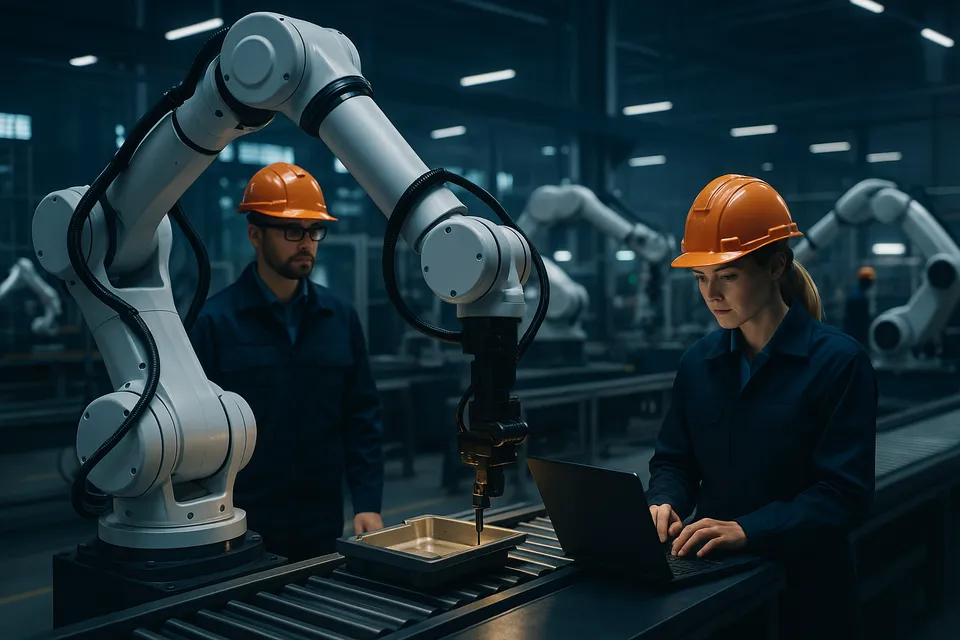
Germany's Focus on Automation
Germany, renowned for its industrial strength and engineering excellence, is at a crucial juncture. Its manufacturing sector, the economic backbone, must enhance global competitiveness. Automation is central to this strategy. Historically, Germany has embraced technology, with automation gaining prominence since the late 20th century. Today, the emphasis is on not just maintaining production but ensuring sustainable and efficient operations in a rapidly changing global market.
Drivers of Automation in Germany
Labor Market Challenges and Aging Population
Germany's demographic trends significantly drive automation. An aging population and shrinking workforce pose challenges to the labor market. Automation compensates for labor shortages, enabling businesses to sustain and even boost productivity.
Need for Enhanced Productivity and Efficiency
The global market's competitiveness demands increased productivity and efficiency. German manufacturers use automation to streamline operations, reduce waste, and optimize output, maintaining their reputation for high-quality products while staying competitive internationally.
Technological Advancements
Advances in AI and machine learning have made automation more accessible and effective. Robotics and smart systems are increasingly sophisticated, allowing businesses to automate complex tasks with greater precision and reliability.

Impact on Small and Medium Enterprises (SMEs)
For Germany's SMEs, automation is transformative. Traditionally resource-constrained, these enterprises can now compete more effectively with larger firms. Automation boosts productivity and reduces costs, enhancing competitiveness. For example, a small manufacturing firm might use automated assembly lines to increase output without proportionally increasing labor costs.
Several SMEs have successfully adopted automation. A mid-sized auto parts manufacturer integrated robotic systems, reducing error rates and improving efficiency. Governmental and non-governmental incentives support such initiatives, encouraging smaller firms to adopt automation technologies.
Challenges and Considerations
Initial Investment and Financial Constraints
The initial investment in automation can be a significant barrier, especially for SMEs. Acquiring and installing automated systems requires careful financial planning and often external funding to manage costs.
Workforce Adaptation and Skill Development
Automation requires workforce adaptation, involving upskilling to manage and maintain new technologies. Training programs and educational initiatives are crucial to equip employees with necessary skills, minimizing job displacement and maximizing human-technology integration.
Data Security and Privacy
Automation increases data management responsibilities. Ensuring data security and privacy is essential, as systems often rely on sensitive information. German companies must comply with strict data protection regulations, necessitating robust cybersecurity measures to prevent breaches and unauthorized access.
Future Outlook and Strategic Implications
Automation's long-term benefits in Germany are substantial, leading to increased efficiency, reduced costs, and improved product quality. As industries embrace automation, economic shifts will create new opportunities in tech-driven roles and industries.
Germany's strategic focus on automation could redefine its competitive landscape globally. By adopting cutting-edge technologies, Germany can set new industrial performance and innovation benchmarks. However, this requires a commitment to sustainable growth, aligning technological advancements with environmental and social considerations.
Germany's vision positions automation at the core of its economic strategy, balancing technological progress with sustainable development. Businesses navigating this shift can benefit from strategic consultancy, such as that provided by AutoProbaho, to optimize their automation journey and secure their future market position.